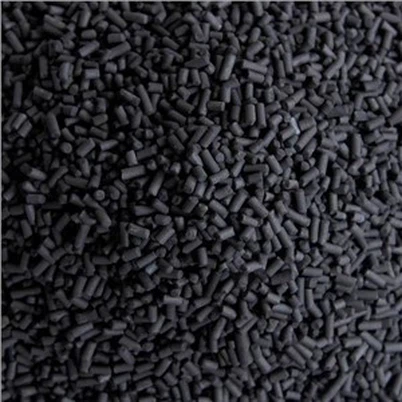
How does Hopcalite compare with other catalysts?
Leave a message

Hey there! As a supplier of Hopcalite, I'm super stoked to talk about how it stacks up against other catalysts. If you're in the market for a top - notch catalyst, hang around because I'm gonna give you the lowdown on why Hopcalite might just be your best bet.
First off, let's briefly explain what Hopcalite is. You can check out more details right here. Essentially, Hopcalite is a mixture of metal oxides, commonly copper, manganese, and sometimes other elements. It's known for its excellent catalytic properties, especially when it comes to oxidizing carbon monoxide.
Now, let's start comparing it with other catalysts. One area where we often look at catalysts is their reactivity. Different catalysts have different levels of reactivity depending on the reaction they're involved in. For instance, some catalysts are great at hydrogenation reactions, while others shine in oxidation reactions. Hopcalite is a champ when it comes to the oxidation of carbon monoxide at room temperature. That's a huge deal because a lot of other catalysts need higher temperatures to do the same job effectively.


Take platinum - based catalysts as an example. Platinum is a well - known and widely used catalyst in the chemical industry. It's super reactive and can be used in a variety of reactions. But here's the thing, platinum is extremely expensive. Mining and refining platinum is a costly process, which drives up the price of platinum - based catalysts. On the other hand, the raw materials for Hopcalite are much more abundant and less expensive. This makes Hopcalite a more cost - effective option, especially for large - scale applications where cost is a major factor.
Another aspect is their selectivity. Selectivity refers to a catalyst's ability to promote a specific reaction and produce specific products, rather than a mixture of unwanted by - products. Hopcalite shows remarkable selectivity in the oxidation of carbon monoxide. It can convert carbon monoxide to carbon dioxide with high efficiency, minimizing the formation of other unwanted compounds.
In contrast, some metal - based catalysts might be less selective. They could potentially react with other substances in the reaction mixture, leading to a more complex product mixture. This not only makes the purification process more difficult and costly but also reduces the overall efficiency of the reaction.
Let's talk about the durability of catalysts. A good catalyst needs to be able to withstand the reaction conditions for a long time without losing its effectiveness. Hopcalite has proven to be quite durable under normal operating conditions. It can maintain its catalytic activity over a decent period, which means less frequent replacement and lower costs in the long run.
However, some polymer - based catalysts may not be as durable. Polymers can degrade under harsh reaction conditions, such as high temperatures or in the presence of certain chemicals. When this happens, the catalytic activity of the polymer - based catalyst decreases, and you'll have to replace it more often.
Now, apart from its great performance as a catalyst, Hopcalite has some other advantages too. It's relatively easy to handle and can be tailored to different applications. We can adjust the composition of Hopcalite to meet the specific requirements of different reactions. This flexibility is something that many other catalysts don't offer.
When compared to Wood Based Activated Carbon For Food Processing, the applications are quite different. Wood - based activated carbon is mainly used in the food processing industry for purification and adsorption purposes. While it does have some catalytic properties in certain reactions, its focus is more on physical adsorption. Hopcalite, on the other hand, is all about catalyzing chemical reactions, especially oxidation reactions.
And if we look at High Quality ABEK Comprehensive Protective Impregnated Activated Carbon, this type of carbon is designed for protective purposes, like filtering out harmful gases in respirators. Its main function is filtration rather than catalysis. Although it also has some interactions with chemical substances, it's not really in the same category as Hopcalite when it comes to catalytic performance.
In terms of environmental impact, Hopcalite is a good option. Since it can work at lower temperatures, it consumes less energy compared to some high - temperature catalysts. This means a lower carbon footprint, which is a big plus in today's environmentally conscious world.
Some other catalysts might require the use of hazardous chemicals during their production or operation. For example, some metal - catalyst production processes involve the use of toxic solvents or strong acids. Hopcalite, on the other hand, can be produced with relatively less hazardous chemicals, making it a more environmentally friendly choice.
One potential drawback of Hopcalite compared to some other catalysts is its limited scope of applications. While it's excellent for carbon monoxide oxidation, it might not be as effective in other types of reactions. For instance, in acid - catalyzed reactions, Hopcalite won't perform as well as an acid - based catalyst. But if your main goal is to oxidize carbon monoxide, you won't find a much better option.
When considering the choice of a catalyst for your specific needs, you need to take into account factors like cost, reactivity, selectivity, durability, and environmental impact. If you're in an industry where carbon monoxide oxidation is a key process, you should definitely give Hopcalite a serious thought.
Whether you're running a small - scale laboratory operation or a large - scale industrial plant, Hopcalite can offer great value for money. Its cost - effectiveness, combined with its good catalytic properties, makes it a competitive option in the market.
So, if you're interested in learning more about Hopcalite or you're ready to make a purchase, don't hesitate to reach out. We'd be more than happy to discuss your requirements and provide you with the best - fitting Hopcalite solution for your business. Let's start a conversation and see how Hopcalite can work wonders in your processes!
References
- General knowledge on catalysts and their properties from academic textbooks and industry reports in the field of catalysis.
- Specific information on Hopcalite's production and applications from internal company research and development data.