How does wood - based activated carbon work in the removal of phenols from water?
Leave a message

Phenols are a class of organic compounds that are commonly found in industrial wastewater, agricultural runoff, and even some natural water sources. These compounds can have harmful effects on human health and the environment, making their removal from water a critical concern. One effective method for removing phenols from water is through the use of wood-based activated carbon. As a supplier of high-quality wood-based activated carbon, I'd like to delve into how this remarkable material works in the removal of phenols from water.
Understanding Phenols and Their Impact
Phenols are characterized by a hydroxyl group (-OH) attached to an aromatic ring. They are used in a wide range of industrial processes, including the production of plastics, resins, dyes, and pharmaceuticals. When released into water bodies, phenols can cause a variety of problems. They have a distinct taste and odor, even at low concentrations, which can make water unpalatable. From an environmental perspective, phenols are toxic to aquatic life, affecting the growth, reproduction, and survival of fish, invertebrates, and other organisms. In humans, exposure to phenols can lead to skin irritation, respiratory problems, and even more severe health issues with long-term or high-level exposure.
What is Wood-Based Activated Carbon?
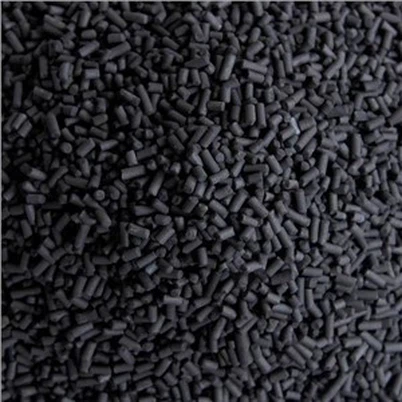
Wood-based activated carbon is a highly porous material produced from wood sources such as coconut shells, hardwoods, and sawdust. The activation process involves heating the wood at high temperatures in the presence of an activating agent, typically steam or a chemical such as phosphoric acid. This process creates a vast network of tiny pores and channels within the carbon, increasing its surface area significantly. A single gram of wood-based activated carbon can have a surface area of up to 1500 square meters or more, providing an enormous amount of contact area for adsorption.
The Adsorption Mechanism
The removal of phenols from water using wood-based activated carbon primarily occurs through a process called adsorption. Adsorption is the adhesion of molecules from a fluid (in this case, water) to the surface of a solid (the activated carbon). There are several factors that contribute to the effectiveness of adsorption in removing phenols:
Physical Adsorption
Physical adsorption, also known as physisorption, is the dominant mechanism for phenol removal by wood-based activated carbon. It is based on weak van der Waals forces between the phenol molecules and the carbon surface. The large surface area of the activated carbon provides numerous sites for phenol molecules to attach. As water containing phenols passes through the activated carbon bed, the phenol molecules are attracted to the carbon surface and become trapped within the pores. The size and shape of the pores play a crucial role in this process. The pores in wood-based activated carbon are typically in the range of micropores (less than 2 nm) and mesopores (2 - 50 nm), which are well-suited for capturing phenol molecules, which have a relatively small molecular size.
Chemical Adsorption
In addition to physical adsorption, chemical adsorption or chemisorption can also occur. Chemisorption involves the formation of chemical bonds between the phenol molecules and the functional groups on the surface of the activated carbon. Wood-based activated carbon can have various functional groups such as hydroxyl (-OH), carboxyl (-COOH), and carbonyl (-C=O) groups on its surface. These functional groups can react with the phenol molecules through processes like hydrogen bonding, acid-base reactions, or complexation. For example, the hydroxyl groups on the carbon surface can form hydrogen bonds with the hydroxyl group of the phenol molecule, enhancing the adsorption affinity.
Electrostatic Interactions
Electrostatic interactions can also contribute to the adsorption of phenols. The surface of wood-based activated carbon can acquire a charge depending on the pH of the solution and the presence of other ions. Phenol molecules can be either positively or negatively charged depending on the pH. At low pH values, phenol is in its molecular form, while at high pH values, it can dissociate into a phenolate ion. The charge on the activated carbon surface can attract or repel the phenol molecules, influencing the adsorption process. For instance, if the carbon surface is negatively charged, it will attract positively charged phenol species or protonated phenol molecules more effectively.
Factors Affecting the Removal of Phenols
Several factors can influence the performance of wood-based activated carbon in removing phenols from water:
Activated Carbon Properties
The properties of the activated carbon, such as its surface area, pore size distribution, and surface chemistry, play a crucial role in phenol removal. As mentioned earlier, a higher surface area provides more adsorption sites, while an appropriate pore size distribution ensures that the phenol molecules can access the pores. The surface chemistry, including the presence of functional groups, can enhance the adsorption through chemical interactions. Different wood sources and activation methods can result in activated carbons with different properties, so choosing the right type of wood-based activated carbon is essential for efficient phenol removal.
Phenol Concentration
The initial concentration of phenols in the water affects the adsorption capacity of the activated carbon. Higher phenol concentrations can lead to faster saturation of the adsorption sites on the carbon surface. As the concentration increases, the driving force for adsorption also increases, but once the available sites are filled, the removal efficiency may decrease. Therefore, for water with high phenol concentrations, a larger amount of activated carbon or a more frequent replacement of the carbon may be required.
pH of the Solution
The pH of the water solution has a significant impact on the adsorption of phenols. As mentioned earlier, the charge state of phenol molecules changes with pH. The optimal pH for phenol adsorption by wood-based activated carbon is typically in the slightly acidic to neutral range. At low pH values, the phenol molecules are in their molecular form, which can be adsorbed more easily through physical and chemical interactions. At high pH values, the formation of phenolate ions may reduce the adsorption efficiency due to electrostatic repulsion or changes in the solubility of the phenol.
Temperature
Temperature can affect the adsorption process in two ways. On one hand, increasing the temperature can increase the kinetic energy of the phenol molecules, making them more mobile and able to reach the adsorption sites on the carbon surface more quickly. On the other hand, adsorption is generally an exothermic process, meaning that it releases heat. Higher temperatures can shift the equilibrium of the adsorption reaction towards desorption, reducing the overall adsorption capacity. Therefore, there is an optimal temperature range for phenol adsorption, and in most cases, room temperature or slightly elevated temperatures are suitable.
Applications of Wood-Based Activated Carbon in Phenol Removal
Wood-based activated carbon is widely used in various applications for phenol removal:
Industrial Wastewater Treatment
Many industries, such as the petrochemical, pharmaceutical, and textile industries, generate wastewater containing phenols. Wood-based activated carbon can be used in fixed-bed adsorption columns or activated sludge systems to remove phenols from the wastewater before it is discharged into the environment. The high adsorption capacity and cost-effectiveness of wood-based activated carbon make it an attractive option for industrial wastewater treatment.
Drinking Water Treatment
Phenols can also find their way into drinking water sources, either through industrial pollution or natural processes. Wood-based activated carbon is commonly used in water treatment plants as part of the filtration process to remove phenols and other organic contaminants. It can improve the taste, odor, and quality of drinking water, ensuring that it meets the regulatory standards for human consumption.
Environmental Remediation
In cases of environmental contamination, such as oil spills or chemical leaks, wood-based activated carbon can be used to remove phenols from soil and groundwater. It can be applied in situ or ex situ to adsorb the phenols and prevent their further spread in the environment.


Our Wood-Based Activated Carbon Products
As a supplier of wood-based activated carbon, we offer a range of high-quality products suitable for phenol removal. Our Wood-based powder Activated Carbon steam is produced using steam activation, which results in a highly porous structure with a large surface area. It has excellent adsorption properties for phenols and other organic contaminants. Our Wood-based Activated Carbon powder is another versatile product that can be used in various applications, including water treatment and environmental remediation.
Contact Us for Procurement
If you are interested in using wood-based activated carbon for the removal of phenols from water or other applications, we invite you to contact us for procurement. Our team of experts can provide you with detailed information about our products, help you choose the right type of activated carbon for your specific needs, and offer technical support throughout the process. We are committed to providing high-quality products and excellent customer service to meet your requirements.
References
- Foo, K. Y., & Hameed, B. H. (2010). Insights into the modeling of adsorption isotherm systems. Chemical Engineering Journal, 156(1), 2-10.
- Huang, C. P., & Weber, W. J. (1970). Kinetics of adsorptive removal of phenolic pollutants from water. Environmental Science & Technology, 4(10), 908-918.
- Li, Q., & Yang, R. T. (2007). Adsorption of phenol and its derivatives from water using synthetic resins and low-cost natural adsorbents: A review. Separation and Purification Technology, 54(1), 49-61.