How to optimize the use of Nut Shell Based Activated Carbon in paper - making wastewater treatment?
Leave a message

In the realm of paper-making, wastewater treatment stands as a critical challenge that demands innovative and effective solutions. Among the various treatment methods, the use of Nut Shell Based Activated Carbon has emerged as a promising approach. As a supplier of Nut Shell Based Activated Carbon, I am well - versed in its properties and applications, and in this blog, I will delve into how to optimize its use in paper - making wastewater treatment.
Understanding the Characteristics of Nut Shell Based Activated Carbon
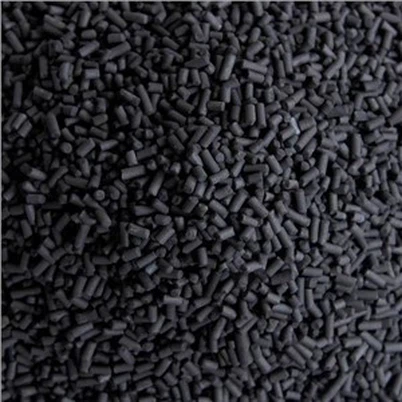
Nut Shell Based Activated Carbon is derived from natural nut shells, which are rich in carbon. Through a series of activation processes, it acquires a highly porous structure with a large specific surface area. This unique structure endows it with excellent adsorption capacity, making it capable of removing a wide range of pollutants from wastewater.
There are different production methods for Nut Shell Based Activated Carbon, each resulting in products with distinct properties. The H₃PO₄ method Nut Shell Activated Carbon is produced using phosphoric acid as an activating agent. This method typically yields activated carbon with a well - developed mesoporous structure, which is beneficial for the adsorption of larger organic molecules.
On the other hand, the Nut Shell Activated Carbon ZnCL is activated with zinc chloride. It often has a high micropore volume, which is effective for the removal of small - sized pollutants such as heavy metal ions and some low - molecular - weight organic compounds.


The Steam nut shell activated carbon is produced by steam activation. This process results in a more uniform pore size distribution and a high degree of surface oxidation, which can enhance the adsorption performance for certain types of pollutants.
Pollutants in Paper - Making Wastewater
Paper - making wastewater contains a complex mixture of pollutants, including suspended solids, organic matter, heavy metals, and dyes. Suspended solids mainly consist of fibers, fillers, and other insoluble substances. Organic matter can be in the form of lignin, hemicellulose, and various chemical additives used in the paper - making process. Heavy metals such as lead, mercury, and cadmium may also be present due to the use of contaminated raw materials or the addition of certain chemicals. Dyes are often used to color the paper, and they can cause significant water pollution if not properly removed.
Optimizing the Use of Nut Shell Based Activated Carbon in Paper - Making Wastewater Treatment
1. Selection of the Appropriate Type of Activated Carbon
The first step in optimizing the use of Nut Shell Based Activated Carbon is to select the appropriate type based on the characteristics of the paper - making wastewater. If the wastewater contains a large amount of large - sized organic molecules, such as lignin, the H₃PO₄ method Nut Shell Activated Carbon may be a better choice due to its well - developed mesoporous structure. For wastewater with high levels of heavy metals or small - molecular - weight organic compounds, the Nut Shell Activated Carbon ZnCL with its high micropore volume can be more effective. When dealing with a wide range of pollutants with different sizes and properties, the Steam nut shell activated carbon with its uniform pore size distribution may be the most suitable option.
2. Determination of the Optimal Dosage
The dosage of Nut Shell Based Activated Carbon is a crucial factor that affects the treatment efficiency. An insufficient dosage may not be able to remove all the pollutants effectively, while an excessive dosage can lead to increased costs and potential secondary pollution. To determine the optimal dosage, laboratory - scale experiments should be conducted first. A series of samples of the paper - making wastewater are taken, and different dosages of activated carbon are added to each sample. After a certain period of contact time, the water quality parameters such as chemical oxygen demand (COD), biochemical oxygen demand (BOD), and turbidity are measured. The dosage that achieves the best treatment effect with the lowest cost is selected as the optimal dosage.
3. Control of the Contact Time
The contact time between the Nut Shell Based Activated Carbon and the paper - making wastewater also plays an important role in the adsorption process. Sufficient contact time is required for the pollutants to diffuse into the pores of the activated carbon and be adsorbed. Generally, the contact time can range from several minutes to several hours, depending on the type of activated carbon, the concentration of pollutants, and the operating conditions. In practical applications, a proper contact time should be determined through pilot - scale tests to ensure that the adsorption process reaches equilibrium.
4. Pretreatment of the Wastewater
Pretreatment of the paper - making wastewater can improve the efficiency of Nut Shell Based Activated Carbon treatment. For example, the removal of large suspended solids through sedimentation or filtration can prevent the blockage of the pores of the activated carbon. Adjusting the pH value of the wastewater can also affect the adsorption performance of the activated carbon. Some pollutants are more easily adsorbed at a certain pH range. Therefore, the pH of the wastewater should be adjusted to the optimal value before the addition of activated carbon.
5. Regeneration of the Activated Carbon
After a period of use, the Nut Shell Based Activated Carbon will reach its adsorption saturation point. Instead of discarding the used activated carbon, it can be regenerated to restore its adsorption capacity. There are several regeneration methods, such as thermal regeneration, chemical regeneration, and biological regeneration. Thermal regeneration is the most commonly used method, which involves heating the used activated carbon in an inert atmosphere to desorb the adsorbed pollutants. Chemical regeneration uses certain chemicals to react with the adsorbed pollutants and remove them from the activated carbon. Biological regeneration uses microorganisms to decompose the adsorbed organic matter. The choice of regeneration method depends on the type of activated carbon, the nature of the adsorbed pollutants, and the economic feasibility.
Case Studies
In some paper - making factories, the use of Nut Shell Based Activated Carbon has achieved remarkable results in wastewater treatment. For example, a paper mill in a certain region was facing serious water pollution problems due to the high content of organic matter and dyes in its wastewater. By using the Steam nut shell activated carbon with an optimized dosage and contact time, the COD of the wastewater was reduced by more than 70%, and the color of the wastewater was significantly improved. After regeneration of the activated carbon, it could be reused for multiple cycles, reducing the overall treatment cost.
Conclusion
Optimizing the use of Nut Shell Based Activated Carbon in paper - making wastewater treatment requires a comprehensive understanding of the characteristics of the activated carbon, the pollutants in the wastewater, and the treatment process. By selecting the appropriate type of activated carbon, determining the optimal dosage and contact time, pretreating the wastewater, and regenerating the used activated carbon, we can achieve high - efficiency and cost - effective wastewater treatment.
If you are interested in using Nut Shell Based Activated Carbon for your paper - making wastewater treatment, I encourage you to contact us for more information and to discuss your specific needs. We are committed to providing high - quality products and professional technical support to help you solve your wastewater treatment problems.
References
- Foo, K. Y., & Hameed, B. H. (2010). Insights into the modeling of adsorption isotherm systems. Chemical Engineering Journal, 156(1), 2 - 10.
- Wang, X., & Peng, L. (2016). Adsorption of heavy metals on activated carbon derived from biomass: A review. Renewable and Sustainable Energy Reviews, 53, 1164 - 1176.
- Crini, G. (2006). Non - conventional low - cost adsorbents for dye removal: A review. Bioresource Technology, 97(1), 1061 - 1085.