

What is the surface area of Hopcalite?
Leave a message

Hopcalite is a well - known catalytic material that has found wide applications in various industries, especially in gas purification and respirator technologies. As a Hopcalite supplier, understanding the surface area of Hopcalite is crucial not only for scientific research but also for meeting the specific needs of our customers. In this blog, we will delve into the concept of the surface area of Hopcalite, its importance, and how it impacts its performance.
Understanding Hopcalite
Hopcalite is a mixture of metal oxides, typically composed of copper oxide (CuO), manganese dioxide (MnO₂), and sometimes other metal oxides such as cobalt oxide (Co₃O₄) and silver oxide (Ag₂O). This unique combination of metal oxides gives Hopcalite its excellent catalytic properties. It is commonly used as a catalyst to convert carbon monoxide (CO) to carbon dioxide (CO₂) at room temperature, making it an essential component in many safety and environmental protection devices.
To learn more about Hopcalite, you can visit our product page Hopcalite.
The Significance of Surface Area
In the world of catalysis, surface area plays a pivotal role. The surface area of a catalyst determines the number of active sites available for chemical reactions. A larger surface area means more molecules of the reactant can come into contact with the catalyst at the same time, increasing the reaction rate. For Hopcalite, a high surface area allows for more efficient conversion of carbon monoxide to carbon dioxide, which is especially important in applications where rapid and complete conversion is required, such as in respirators used in environments with high CO levels.
Measuring the Surface Area of Hopcalite
The surface area of Hopcalite is typically measured using the Brunauer - Emmett - Teller (BET) method. This method is based on the physical adsorption of gas molecules on the surface of the solid material. By measuring the amount of gas adsorbed at different pressures, the BET equation can be used to calculate the specific surface area of the material. The BET surface area is expressed in square meters per gram (m²/g).
The BET method has been widely accepted in the scientific community as a reliable way to measure the surface area of porous materials like Hopcalite. However, it should be noted that the measured surface area may not represent the entire surface area available for catalysis. Some pores may be too small for the reactant molecules to enter, or the active sites may be blocked by impurities or other factors.
Factors Affecting the Surface Area of Hopcalite
Several factors can influence the surface area of Hopcalite. The composition of the metal oxides is one of the most important factors. Different metal oxides have different crystal structures and pore sizes, which can affect the overall surface area of the Hopcalite mixture. For example, a higher proportion of manganese dioxide, which has a relatively porous structure, may increase the surface area of Hopcalite.
The preparation method also has a significant impact on the surface area. The way the metal oxides are mixed, calcined, and treated during the manufacturing process can determine the final pore structure and surface area of Hopcalite. For instance, a longer calcination time at a higher temperature may lead to the sintering of the metal oxide particles, reducing the surface area.

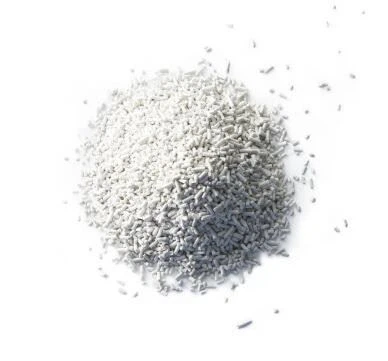
Relationship between Surface Area and Performance
As mentioned earlier, a higher surface area generally leads to better catalytic performance. In the case of Hopcalite, a larger surface area means more active sites for the adsorption and conversion of carbon monoxide. This results in a higher conversion efficiency and a faster reaction rate.
In respirator applications, the performance of Hopcalite is directly related to the safety of the users. A respirator with Hopcalite having a high surface area can provide more effective protection against carbon monoxide poisoning. Similarly, in industrial gas purification systems, Hopcalite with a large surface area can ensure the complete removal of carbon monoxide from the gas stream, improving the quality of the purified gas.
Comparing Hopcalite with Other Catalytic Materials
When comparing Hopcalite with other catalytic materials, its surface area is an important parameter. For example, activated carbon is another commonly used material for gas adsorption and catalysis. Some types of High Quality ABEK Comprehensive Protective Impregnated Activated Carbon and All - purpose protection impregnated carbon have a very high surface area, often exceeding 1000 m²/g. However, Hopcalite has its unique advantages in terms of its catalytic activity for carbon monoxide conversion at room temperature.
While activated carbon can adsorb a wide range of gases, its ability to convert carbon monoxide to carbon dioxide is limited compared to Hopcalite. On the other hand, Hopcalite's surface area is typically in the range of 50 - 200 m²/g, which is sufficient for its catalytic function but lower than some highly porous activated carbons.
Applications of Hopcalite Based on Surface Area
The surface area of Hopcalite determines its suitability for different applications. In small - scale applications such as personal respirators, Hopcalite with a relatively high surface area is preferred to ensure rapid and efficient conversion of carbon monoxide. The limited space in respirators requires a catalyst that can work effectively with a small amount of material.
In large - scale industrial gas purification systems, the surface area requirements may be different. While a high surface area is still beneficial, other factors such as the cost, durability, and ease of regeneration of the catalyst also need to be considered. In some cases, a slightly lower surface area Hopcalite may be acceptable if it can be regenerated easily and at a low cost.
Our Role as a Hopcalite Supplier
As a Hopcalite supplier, we understand the importance of surface area in the performance of our product. We use advanced manufacturing techniques to control the surface area of Hopcalite to meet the specific requirements of our customers. Our quality control processes ensure that each batch of Hopcalite has a consistent surface area and catalytic performance.
We also provide technical support to our customers. If you have any questions about the surface area of Hopcalite or its application in your specific project, our team of experts is ready to assist you. Whether you are in the respirator manufacturing industry or the industrial gas purification field, we can help you select the right Hopcalite product based on your needs.
Contact Us for Purchase and Consultation
If you are interested in purchasing Hopcalite or would like to discuss your specific requirements, please feel free to contact us. We are committed to providing high - quality Hopcalite products and excellent customer service. Our goal is to help you achieve the best results in your applications with our Hopcalite products.
References
- Brunauer, S., Emmett, P. H., & Teller, E. (1938). Adsorption of gases in multimolecular layers. Journal of the American Chemical Society, 60(2), 309 - 319.
- Schüth, F., & Sing, K. S. W. (2002). Handbook of Porous Solids. Wiley - VCH.
- Bansal, R. C., & Goyal, M. (2005). Activated Carbon Adsorption. Taylor & Francis.


