How is the surface area of Hopcalite measured?
Leave a message

Hey there! As a Hopcalite supplier, I often get asked about how the surface area of Hopcalite is measured. It's a crucial aspect because the surface area plays a significant role in determining the effectiveness of Hopcalite in various applications. So, let's dive right into it.


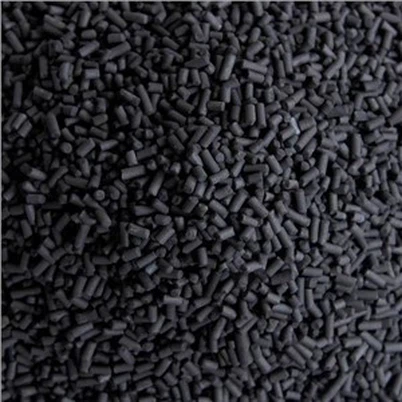
First off, what is Hopcalite? Well, Hopcalite is a catalyst that's widely used for removing carbon monoxide and other harmful gases. You can find more detailed info about it on this page: Hopcalite. It's made up of a mixture of metal oxides, mainly copper and manganese oxides, and sometimes other elements like silver or cobalt are added to enhance its performance.
Now, why is measuring the surface area of Hopcalite so important? The surface area directly affects the catalyst's activity. A larger surface area means more active sites are available for the chemical reactions to take place. In the case of Hopcalite, when it comes into contact with carbon monoxide or other target gases, the reaction occurs on these active sites. So, the more surface area, the more efficiently it can convert harmful gases into less harmful substances.
There are a few different methods to measure the surface area of Hopcalite, and I'll go through the most common ones.
BET Method
The Brunauer - Emmett - Teller (BET) method is probably the most widely used technique for measuring the surface area of porous materials like Hopcalite. It's based on the physical adsorption of gas molecules onto the surface of the sample.
Here's how it works. First, you take a small amount of Hopcalite sample and put it in a special chamber. Then, you evacuate the chamber to remove any adsorbed gases or impurities from the sample surface. After that, you introduce a known amount of an inert gas, usually nitrogen, at a low temperature (around -196°C, which is the boiling point of nitrogen).
The nitrogen gas molecules start to adsorb onto the surface of the Hopcalite. As you increase the pressure of the nitrogen gas, more and more molecules are adsorbed. By measuring the amount of nitrogen adsorbed at different pressures, you can plot a graph called an adsorption isotherm.
The BET equation is then used to analyze this isotherm. It allows you to calculate the monolayer capacity of the sample, which is the amount of gas needed to form a single layer of molecules on the surface. From the monolayer capacity, you can then calculate the surface area of the Hopcalite sample.
The BET method is great because it gives a reliable and accurate measurement of the total surface area, including both the external and internal surface areas of the porous Hopcalite particles. However, it does require some specialized equipment and a trained operator to carry out the measurements.
Langmuir Method
Another method is the Langmuir method. Similar to the BET method, it also relies on gas adsorption. But the Langmuir method assumes that the adsorption is monolayer only, meaning that the gas molecules adsorb onto the surface in a single layer and don't form multiple layers.
In the Langmuir method, you also introduce a gas (usually nitrogen) to the Hopcalite sample at a controlled temperature and pressure. You measure the amount of gas adsorbed as a function of pressure. Then, you use the Langmuir equation to analyze the data and calculate the surface area.
The Langmuir method is simpler than the BET method in terms of the theoretical model. However, it may not be as accurate for materials like Hopcalite, which often have a porous structure with the possibility of multilayer adsorption. So, it's more commonly used as a quick and rough estimate of the surface area.
Mercury Intrusion Porosimetry
Mercury intrusion porosimetry is a different approach. Instead of using gas adsorption, it uses mercury. Mercury is a non - wetting liquid for most materials, including Hopcalite.
You place the Hopcalite sample in a chamber and then gradually increase the pressure of mercury around the sample. As the pressure increases, mercury starts to penetrate into the pores of the Hopcalite. By measuring the amount of mercury intruded at different pressures, you can determine the pore size distribution and the total pore volume of the sample.
From the pore volume and the known density of Hopcalite, you can calculate the surface area. This method is particularly useful for measuring the surface area associated with larger pores in the Hopcalite. But it has some limitations. For example, it can't accurately measure the surface area of very small pores because mercury may not be able to penetrate into them even at high pressures.
When we produce Hopcalite in our facility, we use a combination of these methods to get a comprehensive understanding of the surface area. We start with the BET method as our primary measurement technique because of its accuracy. Then, we may use the Langmuir method for a quick check during the production process to make sure the surface area is within the desired range. And we also use mercury intrusion porosimetry to analyze the pore structure and get additional information about the surface area related to different pore sizes.
Now, let's talk about how the surface area of Hopcalite relates to its applications. As I mentioned earlier, a larger surface area generally means better performance. For example, in gas masks or air purification systems that use Hopcalite to remove carbon monoxide, a Hopcalite with a high surface area can adsorb and convert more carbon monoxide in a shorter period of time.
If you're in the market for all - purpose protection, you might be interested in All - purpose protection impregnated carbon. It combines the properties of impregnated carbon with the catalytic activity of Hopcalite in some cases. And if you're dealing with the removal of toxic gases other than carbon monoxide, Impregnated Activated Carbon for removal toxic gas could be a great option.
We, as a Hopcalite supplier, understand the importance of surface area and how it impacts the performance of our product. We ensure that our Hopcalite has a consistent and high surface area through strict quality control measures during the production process.
If you're looking for a reliable Hopcalite supplier for your gas - removal or catalytic applications, we'd love to talk to you. Whether you need Hopcalite for industrial air purification, personal protective equipment, or any other use, we can provide you with high - quality products tailored to your specific requirements. Just reach out to us, and we can start a discussion about your needs and how our Hopcalite can meet them.
References
- Gregg, S. J., & Sing, K. S. W. (1982). Adsorption, Surface Area and Porosity. Academic Press.
- Lowell, S., Shields, J. E., Thomas, M. A., & Thommes, M. (2004). Characterization of Porous Solids and Powders: Surface Area, Pore Size and Density. Springer.