What are its applications in the aerospace industry if any?
Leave a message

As a Hopcalite supplier, I am often intrigued by the diverse applications of this remarkable catalyst. While Hopcalite is well - known for its use in gas masks and air purification systems on Earth, its potential applications in the aerospace industry are a fascinating area of exploration.


1. Hopcalite: A Brief Introduction
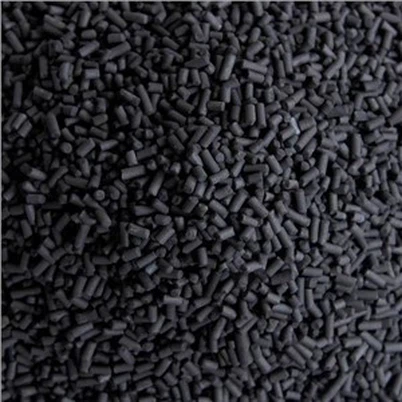
Hopcalite is a mixture of metal oxides, primarily copper and manganese oxides, with small amounts of other metals such as silver. It is a highly effective catalyst for the oxidation of carbon monoxide (CO) at room temperature. The catalytic activity of Hopcalite stems from its unique surface properties and the ability of its metal oxides to facilitate redox reactions. When CO molecules come into contact with the Hopcalite surface, they are oxidized to carbon dioxide (CO₂), which is much less toxic.
2. Air Purification in Spacecraft
One of the most critical aspects of space missions is maintaining a clean and breathable atmosphere inside the spacecraft. Astronauts produce carbon monoxide through various activities, such as the operation of equipment and the combustion of fuels in emergency situations. Even small amounts of CO can be dangerous to human health, as it binds to hemoglobin in the blood, reducing the oxygen - carrying capacity of the blood.
Hopcalite can be used in air purification systems on spacecraft to remove CO from the cabin air. These systems would work in a similar way to those on Earth. The cabin air is circulated through a filter containing Hopcalite, where the CO is oxidized to CO₂. The CO₂ can then be removed from the air by other means, such as through the use of a carbon dioxide scrubber.
The advantage of using Hopcalite in spacecraft air purification is its high efficiency at room temperature. Unlike some other catalysts, Hopcalite does not require high temperatures to function effectively, which is a significant advantage in the limited - energy environment of a spacecraft. Additionally, Hopcalite has a long lifespan and can operate for extended periods without needing frequent replacement, which is crucial for long - duration space missions.
3. Planetary Surface Exploration
When exploring other planets, such as Mars, the atmosphere may contain various toxic gases, including carbon monoxide. Rovers and landers sent to these planets need to have air purification systems to protect their sensitive electronic components and scientific instruments from the corrosive effects of these gases.
Hopcalite can be incorporated into the air intake systems of these vehicles. As the vehicles move across the planetary surface, the air is drawn in and passed through a Hopcalite - based filter. This filter can remove CO and other oxidizable gases, ensuring that the internal environment of the vehicle remains clean and free from harmful contaminants.
Moreover, for future human - rated missions to Mars or other planets, Hopcalite can play a vital role in the habitats established on the planetary surface. These habitats will need to maintain a safe and breathable atmosphere for the astronauts. Hopcalite - based air purification systems can be an essential part of the overall life - support infrastructure, providing continuous protection against CO and other toxic gases.
4. Comparison with Other Air Purification Technologies
There are other technologies available for air purification, such as Impregnated Activated Carbon for removal toxic gas, All - purpose protection impregnated carbon, and Comprehensive Protection Impregnated Activated Carbon. These impregnated activated carbons are effective at adsorbing a wide range of gases, including organic vapors and some toxic gases.
However, Hopcalite has its unique advantages. While activated carbon mainly works through adsorption, Hopcalite works through catalytic oxidation. This means that Hopcalite can convert CO into a less harmful substance (CO₂), rather than just trapping it. In the long run, this can be more effective in maintaining a clean and safe atmosphere, especially in closed - loop systems like those in spacecraft and planetary habitats.
5. Challenges and Considerations
Despite its potential, there are some challenges to using Hopcalite in the aerospace industry. One of the main challenges is the long - term stability of Hopcalite in the harsh space environment. The radiation, extreme temperatures, and low - pressure conditions in space can potentially affect the catalytic activity of Hopcalite.
Research is ongoing to develop more stable formulations of Hopcalite that can withstand these conditions. Another challenge is the weight and volume of the Hopcalite - based air purification systems. In space missions, every kilogram of payload and every cubic centimeter of volume is precious. Engineers need to design compact and lightweight systems that can still provide effective air purification.
6. Future Prospects
The future of Hopcalite in the aerospace industry looks promising. As space exploration continues to expand, the need for reliable air purification systems will only increase. With further research and development, Hopcalite - based systems can become even more efficient, compact, and durable.
For example, nanotechnology could be used to enhance the catalytic activity of Hopcalite by increasing its surface area and improving its reactivity. Additionally, the integration of Hopcalite with other air purification technologies could lead to more comprehensive and effective air purification solutions for the aerospace industry.
7. Contact for Procurement
If you are interested in exploring the potential of Hopcalite for your aerospace applications, I encourage you to reach out for a procurement discussion. Our team of experts can provide detailed information about the properties and performance of our Hopcalite products, as well as offer customized solutions to meet your specific requirements.
References
- Kaye, G. W. C., & Laby, T. H. (Eds.). (1995). Tables of Physical and Chemical Constants. Longman.
- Spivey, J. J. (1987). Heterogeneous catalytic oxidation of carbon monoxide. Chemical Reviews, 87(3), 407 - 419.
- West, R. (1985). Chemistry of the Elements. Wiley.