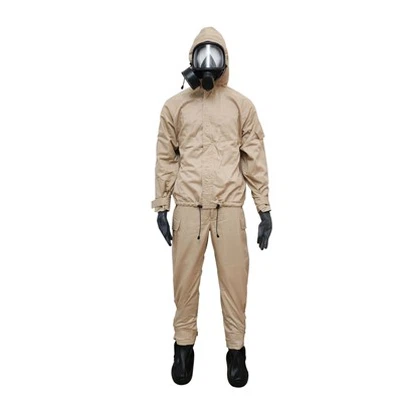
What is the maximum pressure a chemical suit can withstand?
Leave a message

What is the Maximum Pressure a Chemical Suit Can Withstand?
As a supplier of high - quality chemical suits, I often receive inquiries from customers about the maximum pressure these suits can withstand. Understanding this crucial parameter is essential for industries where workers are exposed to hazardous chemicals under various pressure conditions.
The Basics of Chemical Suit Pressure Resistance
Chemical suits are designed to protect the wearer from a wide range of chemical hazards, including liquids, gases, and particulates. The pressure resistance of a chemical suit refers to its ability to maintain its integrity and provide effective protection when subjected to external pressure.
There are several factors that influence the maximum pressure a chemical suit can withstand. Material composition is one of the most significant factors. Different materials have different mechanical properties, such as tensile strength, tear resistance, and flexibility. For example, suits made from high - density polyethylene (HDPE) may have different pressure - bearing capabilities compared to those made from butyl rubber or neoprene.
The construction of the chemical suit also plays a vital role. Seams, closures, and joints are potential weak points. A well - constructed suit with strong seams and reliable closures is more likely to withstand higher pressures. For instance, suits with double - stitched seams or heat - sealed joints tend to be more pressure - resistant than those with simple single - stitched seams.
Pressure Ratings in Different Types of Chemical Suits
CBRN Personal Protection System
The CBRN Personal Protection System is designed to protect against chemical, biological, radiological, and nuclear threats. These suits often need to withstand relatively high pressures, especially in scenarios where there is a risk of exposure to high - pressure chemical releases or in environments with significant over - or under - pressure.
The maximum pressure a CBRN suit can withstand depends on its specific design and intended use. Some advanced CBRN suits can withstand pressures up to several hundred pascals (Pa). For example, in a laboratory setting where there is a potential for a sudden release of pressurized chemical agents, a high - performance CBRN suit can prevent the ingress of these agents even under elevated pressure conditions.
Protective Chemical Suit
The Protective Chemical Suit is a more general - purpose suit used in a variety of industrial applications. These suits are typically designed to protect against common chemical spills and splashes. The pressure resistance of a protective chemical suit is usually lower compared to CBRN suits.
Most standard protective chemical suits can withstand pressures in the range of tens of pascals. For example, in a chemical manufacturing plant where workers are handling chemicals in open containers, the suit only needs to protect against minor splashes and low - pressure leaks. However, in some cases where there is a risk of a more forceful release, such as a valve failure, a suit with a higher pressure rating may be required.
Totally Enclosed Chemical Suit
The Totally Enclosed Chemical Suit provides the highest level of protection, enclosing the entire body of the wearer. These suits are often used in extremely hazardous environments, such as in the cleanup of chemical spills or in the handling of highly toxic substances.
Due to their design and the need for complete isolation from the environment, totally enclosed chemical suits can have relatively high pressure - resistance capabilities. They can typically withstand pressures in the range of several tens to a few hundred pascals, depending on the specific model and material. For example, in a scenario where a large - scale chemical storage tank has a leak and there is a risk of a high - pressure release, a totally enclosed chemical suit can provide the necessary protection for the cleanup crew.


Testing and Certification of Pressure Resistance
To ensure the safety and reliability of chemical suits, they undergo rigorous testing to determine their pressure - resistance capabilities. Testing methods may include subjecting the suit to increasing pressures in a controlled environment and monitoring for any signs of leakage or structural failure.
Certification bodies play a crucial role in verifying the pressure - resistance ratings of chemical suits. International standards, such as those set by the International Organization for Standardization (ISO), provide guidelines for testing and certifying chemical suits. A suit that meets these standards has been proven to withstand a certain level of pressure under specific conditions.
Real - World Applications and Considerations
In real - world applications, the maximum pressure a chemical suit can withstand must be carefully considered in relation to the specific work environment. For example, in the oil and gas industry, workers may be exposed to high - pressure chemical releases during well - drilling operations or pipeline maintenance. In such cases, a chemical suit with a high pressure - resistance rating is essential.
On the other hand, in a research laboratory where the risk of pressure is relatively low, a suit with a lower pressure rating may be sufficient. It is also important to consider other factors, such as the duration of exposure and the type of chemicals involved. Some chemicals may have a more corrosive effect on the suit material, which can reduce its pressure - resistance over time.
Conclusion
Understanding the maximum pressure a chemical suit can withstand is crucial for ensuring the safety of workers in hazardous environments. As a chemical suit supplier, we are committed to providing high - quality suits that meet the diverse needs of our customers. Whether you need a CBRN Personal Protection System, a Protective Chemical Suit, or a Totally Enclosed Chemical Suit, we have the expertise and products to offer the right solution.
If you are interested in learning more about our chemical suits or have specific requirements for your industry, please feel free to contact us for a detailed discussion and procurement negotiation. We look forward to working with you to provide the best protection for your workforce.
References
- ISO standards related to chemical protective clothing
- Technical literature from chemical suit manufacturers
- Industry research reports on chemical suit safety and performance