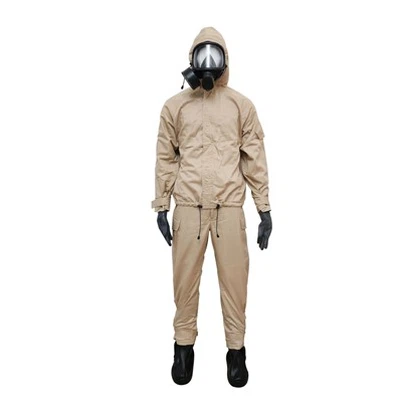
Are there any side - effects of wearing a gas mask?
Leave a message

As a gas mask supplier, I've had numerous conversations with customers who are curious about the potential side - effects of wearing these essential pieces of personal protective equipment. Gas masks are designed to protect users from harmful gases, vapors, and particulate matter, but like any piece of equipment, they can have certain impacts on the wearer.
Physical Discomfort
One of the most common side - effects of wearing a gas mask is physical discomfort. The mask is typically made to fit tightly around the face to ensure a proper seal. This tight fit can lead to pressure points on the face, especially around the edges of the mask. Over time, this pressure can cause soreness, redness, and even bruising in some cases. For example, the straps that hold the mask in place can dig into the skin behind the ears or at the back of the head, causing irritation.
The weight of the gas mask can also be a factor. Some masks, especially those with additional features such as filters and drinking water equipment, can be relatively heavy. Wearing a heavy mask for an extended period can lead to neck and shoulder fatigue. Workers in industrial settings who need to wear gas masks for long shifts may find themselves experiencing muscle strain as a result.
Breathing Difficulties
Another significant side - effect is breathing difficulties. Gas masks are equipped with filters that are designed to remove harmful substances from the air. However, these filters can also create resistance when breathing in and out. This resistance, known as breathing resistance, can make it more difficult for the wearer to take in a full breath.
For individuals with pre - existing respiratory conditions such as asthma or chronic obstructive pulmonary disease (COPD), this breathing resistance can be particularly challenging. Even for healthy individuals, wearing a gas mask for a long time can cause shortness of breath and a feeling of being out of breath more quickly than normal.
Some advanced gas masks, like the Positive pressure air respirator, are designed to reduce breathing resistance by providing a positive pressure of air. However, these types of masks are often more expensive and may not be suitable for all applications.
Heat and Humidity Build - up
Gas masks create a sealed environment around the face, which can lead to heat and humidity build - up. The body naturally produces heat and moisture when breathing, and in a sealed mask, this heat and moisture have nowhere to go. As a result, the inside of the mask can become very hot and humid.
This build - up of heat and humidity can cause several problems. It can make the wearer feel uncomfortable and can also lead to sweating. Excessive sweating inside the mask can fog up the visor, reducing visibility. In addition, the moist environment can promote the growth of bacteria and fungi, which can lead to skin infections or other health issues.
To address this issue, some gas masks are designed with ventilation systems. These systems allow some of the hot and humid air to escape, helping to keep the inside of the mask cooler and drier. For example, the Gas mask with drinking water equipment may have better ventilation features to deal with the heat and humidity generated during use.
Psychological Effects
Wearing a gas mask can also have psychological effects on the wearer. The feeling of being isolated behind a mask can be disorienting and can cause feelings of anxiety and claustrophobia. Workers who are required to wear gas masks in confined spaces may be particularly susceptible to these psychological effects.
In addition, the limited field of vision provided by a gas mask can also contribute to a sense of unease. The visor of a gas mask may restrict the wearer's peripheral vision, making it more difficult to be aware of their surroundings. This can be a safety concern in some work environments where workers need to be constantly vigilant.
Impact on Communication
Communication can be severely affected when wearing a gas mask. The mask muffles the wearer's voice, making it difficult for others to understand what they are saying. This can be a major problem in workplaces where clear communication is essential for safety and efficiency.
For example, in a chemical plant, workers need to be able to communicate quickly and clearly in case of an emergency. If they are wearing gas masks, misunderstandings can occur, which can potentially lead to dangerous situations. Some gas masks are designed with built - in communication systems to address this issue, but these features can add to the cost of the mask.


Minimizing Side - Effects
While there are several side - effects associated with wearing a gas mask, there are also ways to minimize these effects. Proper fitting of the mask is crucial. A well - fitting mask will provide a good seal without causing excessive pressure on the face. It is important to measure the face accurately and choose the right size of mask.
Regular breaks should be taken to allow the wearer to rest and relieve some of the physical and psychological stress. During these breaks, the mask can be removed to allow the face to breathe and to reduce heat and humidity build - up.
Training is also essential. Workers should be trained on how to properly use and maintain their gas masks. They should be taught how to adjust the straps for a comfortable fit, how to recognize the signs of breathing difficulties, and how to communicate effectively while wearing a mask.
Conclusion
In conclusion, while gas masks are an important piece of personal protective equipment, they do come with some side - effects. Physical discomfort, breathing difficulties, heat and humidity build - up, psychological effects, and communication issues are all potential problems that wearers may face. However, by taking appropriate measures such as proper fitting, regular breaks, and training, these side - effects can be minimized.
If you are in need of high - quality gas masks that are designed to minimize side - effects and provide maximum protection, we are here to help. We offer a wide range of gas masks, including the ABEK Half Mask, Positive pressure air respirator, and Gas mask with drinking water equipment. Contact us to discuss your specific requirements and start a procurement negotiation.
References
- Occupational Safety and Health Administration (OSHA). Guidelines for the use of respiratory protection equipment.
- National Institute for Occupational Safety and Health (NIOSH). Research on the effects of wearing gas masks in industrial settings.
- Journal of Occupational and Environmental Hygiene. Articles on the physical and psychological impacts of gas mask use.