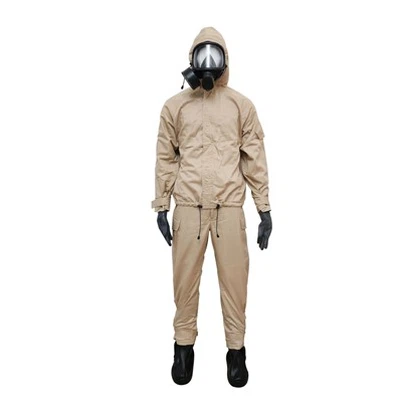
Can the MF34 type Gas Mask protect against biological agents?
Leave a message

As a supplier of the MF34 type Gas Mask, I often encounter questions from customers regarding its effectiveness against various threats, especially biological agents. In this blog post, I aim to provide a comprehensive and scientific analysis of whether the MF34 type Gas Mask can protect against biological agents.
Understanding Biological Agents
Biological agents are living organisms or their toxic products that can cause disease in humans, animals, or plants. These agents include bacteria, viruses, fungi, and toxins produced by these organisms. Examples of well - known biological agents are anthrax (caused by the bacterium Bacillus anthracis), smallpox (caused by the variola virus), and botulinum toxin produced by the bacterium Clostridium botulinum.
The danger of biological agents lies in their ability to spread rapidly, either through the air (aerosols), direct contact, or through vectors such as insects. Once inhaled or in contact with the body, they can cause a wide range of symptoms from mild illness to severe and potentially fatal diseases.
How the MF34 Type Gas Mask Works
The MF34 type Gas Mask is designed to protect the wearer from a variety of harmful substances, including chemical gases, vapors, and particulate matter. It consists of a facepiece that forms a seal around the face to prevent the entry of contaminants, and a filter cartridge that removes the harmful substances from the air being inhaled.
The filter cartridge of the MF34 type Gas Mask is the key component for protection. It typically uses a combination of physical and chemical filtration mechanisms. Physical filtration involves trapping particles based on their size. The filter media has pores that are small enough to block large particles, while chemical filtration uses adsorbents and catalysts to react with and neutralize chemical gases and vapors.
Protection Against Biological Agents
Particle Filtration
Biological agents, such as bacteria and viruses, are particulate in nature. Bacteria typically range in size from 0.5 to 5 micrometers, while viruses are much smaller, usually in the range of 0.02 to 0.3 micrometers. The MF34 type Gas Mask's filter cartridge is designed to have a high - efficiency particulate air (HEPA) filter or a similar type of filter that can effectively trap particles in the size range of biological agents.
A good HEPA filter can remove at least 99.97% of particles that are 0.3 micrometers in diameter. Since most bacteria are larger than 0.3 micrometers, the filter can effectively block them. However, viruses, being smaller, may pose a greater challenge. But modern filter technologies are becoming increasingly effective at capturing even these tiny particles.
Seal Integrity
Another crucial aspect of protection against biological agents is the integrity of the mask's seal. A proper seal around the face is essential to prevent the entry of contaminated air. The MF34 type Gas Mask is designed with adjustable straps and a soft, flexible facepiece that can conform to different face shapes. This helps to create a tight seal, reducing the risk of biological agents bypassing the filter and entering the respiratory system.
Compatibility with Other Protective Equipment
In addition to the mask itself, the MF34 type Gas Mask can be used in conjunction with other protective equipment, such as protective suits, gloves, and goggles. This comprehensive approach to protection further reduces the risk of exposure to biological agents. When used as part of a full - body protection system, the effectiveness of the overall protection is significantly enhanced.
Limitations
While the MF34 type Gas Mask offers a high level of protection against biological agents, it is not without limitations.
Filter Capacity
The filter cartridge has a limited capacity to adsorb and trap contaminants. Over time, as the filter becomes saturated with particles and chemicals, its efficiency may decrease. In an environment with a high concentration of biological agents, the filter may need to be replaced more frequently to maintain effective protection.
Human Error
The effectiveness of the mask also depends on proper use and maintenance by the wearer. If the mask is not worn correctly, or if the seal is broken due to improper adjustment or movement, the protection may be compromised. Additionally, failure to replace the filter cartridge at the appropriate time can also reduce the mask's effectiveness.
Comparison with Other Gas Masks
There are other gas masks available in the market, such as the Gas mask poison radioactive dust and Gas mask poison radioactive dust. Each of these masks has its own features and capabilities. The MF34 type Gas Mask, however, is specifically engineered to provide a balance between protection against a wide range of threats, including biological agents, and user comfort.
Another product in the market is the P - A - 1 Industry Full Mask. While it also offers protection, the MF34 type Gas Mask may have an edge in terms of its specialized filter technology and better fit for a wider range of face shapes.


Conclusion
In conclusion, the MF34 type Gas Mask can provide effective protection against biological agents. Its high - efficiency filtration system, combined with a well - designed facepiece for a proper seal, makes it a reliable choice for protecting the wearer from harmful biological particles. However, it is important to be aware of its limitations and to use the mask correctly and maintain it properly.
If you are in need of reliable protection against biological agents and other harmful substances, the MF34 type Gas Mask is a great option. We are committed to providing high - quality products and excellent customer service. If you are interested in purchasing the MF34 type Gas Mask or have any questions about our products, please feel free to contact us for further discussion and procurement negotiation.
References
- "Biological Agents: A Threat Assessment" - World Health Organization
- "Principles of Filtration in Gas Masks" - Journal of Industrial Hygiene
- "Advances in Personal Protective Equipment for Biological Threats" - International Journal of Occupational Safety and Health