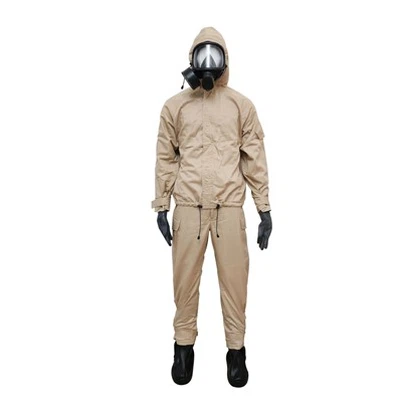
How to take off a chemical suit safely?
Leave a message

Hey there! As a supplier of chemical suits, I've seen firsthand how crucial it is to know how to take off these suits safely. Chemical suits are designed to protect us from all sorts of hazardous substances, but if we don't remove them correctly, we could end up exposing ourselves to those very dangers. So, let's dive into the steps of safely taking off a chemical suit.
Pre - removal Preparation
Before you even start thinking about taking off the suit, you need to make sure you're in a safe environment. Find a decontamination area that's well - ventilated. This space should be separated from clean areas to prevent any spread of contaminants.


If you're wearing any additional equipment like gloves, boots, or a respirator, check them for visible signs of damage or contamination. If there are any issues, note them down. This will help you decide if the equipment can be reused or needs to be disposed of properly.
Step 1: Remove Outer Gloves
The first thing you want to do is get rid of those outer gloves. Grasp the outside of one glove near the wrist, being careful not to touch your skin. Pull the glove off slowly, turning it inside out as you go. Hold the removed glove in the gloved hand. Then, slide your fingers of the bare hand under the remaining glove at the wrist and pull it off in the same way, so the first glove gets wrapped up inside the second one. This way, you keep the contaminated parts on the inside.
Step 2: Remove Respirator
If you've been wearing a respirator, it's time to take it off. First, make sure you're in a clean enough area where you can safely breathe without it. If you're in a situation where there might still be some low - level contaminants in the air, you can use a filtered area or a fresh - air supply.
Loosen the straps of the respirator carefully. Start from the bottom straps and work your way up. Gently lift the respirator off your face, being cautious not to touch the front part which has been filtering the air and might be contaminated.
Step 3: Open the Chemical Suit
Now, let's get to the suit itself. Locate the zipper or fasteners of the chemical suit. If it's a zipper, start from the top and slowly unzip it all the way down. If it's a different type of fastener, like snaps or Velcro, open them one by one.
As you're opening the suit, try to keep your movements slow and controlled. You don't want to create any sudden air currents that could blow contaminants around.
Step 4: Roll Down the Suit
Once the suit is open, start rolling it down from the shoulders. Roll it down over your arms and torso. As you roll, be aware of any parts of the suit that might be contaminated. Try to keep those parts from touching your skin.
When you get to your waist, you can step out of the suit one leg at a time. Make sure to roll the suit down over your legs as well. By the end, you should have the suit rolled up into a bundle with the contaminated side mostly on the inside.
Step 5: Remove Inner Gloves
After you're out of the suit, it's time to take off the inner gloves. Follow the same procedure as when you removed the outer gloves. Pull them off, turning them inside out to contain the contaminants.
Step 6: Dispose of the Suit Properly
Now that you've successfully taken off the suit, you need to get rid of it in the right way. Put the rolled - up suit into a designated hazardous waste container. Make sure the container is clearly labeled for chemical - contaminated waste.
Types of Chemical Suits and Their Removal
There are different types of chemical suits, and while the general removal process is similar, there are some differences.
Protective Chemical Suit
The Protective Chemical Suit is a common type. It's usually made of materials that offer a good level of protection against a variety of chemicals. When taking off this suit, pay extra attention to the seams. Some chemicals can seep through the seams, so when you're opening and rolling down the suit, make sure not to let the seams touch your skin.
Protective Suit
The Protective Suit is often a more connected design. It might have integrated boots and gloves. When removing this type of suit, you need to be extra careful when separating the different parts. For example, if the boots are attached, you need to make sure you don't accidentally spread contaminants from the boots to other parts of your body as you take the suit off.
CBRN Protective Chemical Suit
The CBRN Protective Chemical Suit is designed to protect against chemical, biological, radiological, and nuclear threats. These suits are usually more complex and might have additional layers or features. When taking off a CBRN suit, you might need to follow more strict decontamination procedures before and after removal. For instance, there could be specific areas on the suit that need to be wiped down with a special decontamination solution.
Post - removal Decontamination
After you've taken off the suit, it's not over yet. You need to decontaminate yourself. Take a thorough shower using soap and water. Pay special attention to areas that might have come into contact with the suit, like your wrists, neck, and ankles.
Wash your hair as well, as hair can trap contaminants. After your shower, put on clean clothes.
Training and Practice
Taking off a chemical suit safely isn't something you can just learn from reading about it. You need to have proper training and practice. Many workplaces offer training sessions where employees can learn the correct procedures under the guidance of experts.
Practice makes perfect, and the more you practice taking off the suit, the more comfortable and confident you'll be in a real - life situation.
Why It Matters
The reason why taking off a chemical suit safely is so important is obvious. If we don't do it right, we risk exposing ourselves to harmful chemicals. These chemicals can cause all sorts of health problems, from skin rashes and burns to more serious long - term illnesses like cancer or respiratory diseases.
By following the correct procedures, we protect not only ourselves but also our colleagues and the environment.
Contact for Purchase and Consultation
If you're in the market for high - quality chemical suits, whether it's the Protective Chemical Suit, Protective Suit, or CBRN Protective Chemical Suit, we're here to help. We can provide you with the right suits for your specific needs and offer advice on how to use and maintain them. Reach out to us to start a discussion about your requirements.
References
- Occupational Safety and Health Administration (OSHA). Guidelines for Chemical Suit Use and Removal.
- Centers for Disease Control and Prevention (CDC). Personal Protective Equipment for Hazardous Chemicals.