How long does Protective Globular Activated Carbon last?
Leave a message

Hey there! As a supplier of Protective Globular Activated Carbon, I often get asked this burning question: "How long does Protective Globular Activated Carbon last?" Well, let's dive right into it and break down all the factors that determine its lifespan.
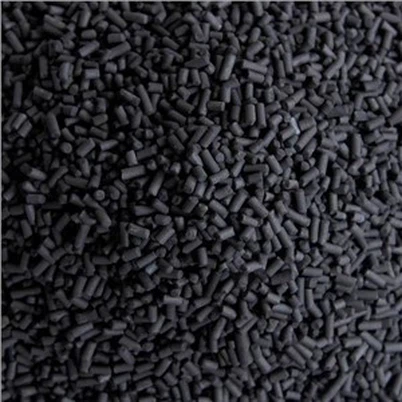
First off, what the heck is Protective Globular Activated Carbon? It's a super - useful material that's widely used for adsorption purposes. You can check out more about it on our Protective Globular Activated Carbon page. This carbon comes in a spherical shape, which gives it some unique properties compared to other forms of activated carbon. It has a high surface area, which means it can adsorb a whole bunch of different substances, like chemicals, gases, and odors.
Now, let's talk about the factors that affect how long it lasts. The first biggie is the quality of the carbon itself. When we produce our Protective Globular Activated Carbon, we make sure to use high - grade raw materials and a top - notch manufacturing process. This results in a product with a large number of micropores and a high adsorption capacity. High - quality carbon generally lasts longer because it can hold more of the stuff it's adsorbing before it gets saturated.
Another factor is the environment where the carbon is used. If it's in an environment with a high concentration of pollutants, it's going to work harder and get saturated faster. For example, in an industrial setting where there are lots of harmful chemicals in the air, the carbon will adsorb those chemicals quickly. On the other hand, if it's used in a relatively clean environment, like a home with good air quality, it can last much longer.
The flow rate of the gas or liquid passing through the carbon also matters. A higher flow rate means that more of the pollutant - laden gas or liquid comes into contact with the carbon in a shorter period of time. This can cause the carbon to reach its saturation point quicker. So, if you're using Protective Globular Activated Carbon in a filtration system, you need to consider the flow rate carefully.
The type of pollutants being adsorbed is yet another crucial factor. Some pollutants are easier to adsorb than others. For instance, simple gases like methane are generally adsorbed more readily than complex organic compounds. The size and chemical nature of the pollutants play a role here. Larger molecules might have a harder time getting into the micropores of the carbon, while highly reactive chemicals could potentially react with the carbon surface and change its properties over time.
Now, let's try to put some numbers on this. In a typical home air purifier using our Protective Globular Activated Carbon, under normal conditions (moderate air pollution levels and a reasonable flow rate), the carbon can last anywhere from 6 to 12 months. But in an industrial setting with high - level pollution, it might need to be replaced every 1 to 3 months.
Medical applications are another area where Protective Globular Activated Carbon is used. In medical settings, it's used for things like removing toxins from the body or purifying medical gases. You can find more about Medical Globular Activated Carbon on our website. In these applications, the lifespan of the carbon is often determined by strict medical protocols. Usually, it's replaced after a single use or after a very short period of time to ensure the highest level of safety and effectiveness.
How can you tell when the Protective Globular Activated Carbon has reached the end of its useful life? One way is to monitor the performance of the system it's in. If you're using it in an air purifier, and you start to notice that the air quality isn't improving as much as it used to, or if you can still smell odors that the purifier is supposed to remove, it might be time to replace the carbon. In some industrial applications, there are more sophisticated monitoring methods, like measuring the concentration of pollutants before and after the carbon filter.
So, as you can see, there's no one - size - fits - all answer to how long Protective Globular Activated Carbon lasts. It depends on a whole bunch of factors, from the quality of the carbon to the environment it's used in.


If you're in the market for Protective Globular Activated Carbon, whether it's for a home air purifier, an industrial filtration system, or a medical application, we're here to help. We've got a wide range of products to suit different needs and budgets. And we can provide you with all the technical support you need to make sure you're using the carbon effectively and getting the most out of it.
Don't hesitate to reach out to us if you have any questions or if you're interested in starting a purchase negotiation. We're always happy to talk about how our Protective Globular Activated Carbon can meet your specific requirements.
References
- Activated Carbon Handbook: A Comprehensive Guide to the Science and Applications of Activated Carbon.
- Journal of Environmental Science and Technology - Studies on Adsorption Kinetics of Activated Carbon.